8/11/2026
EPCS Without the EHR: What Small Dental and Psychiatric Practices Actually Need
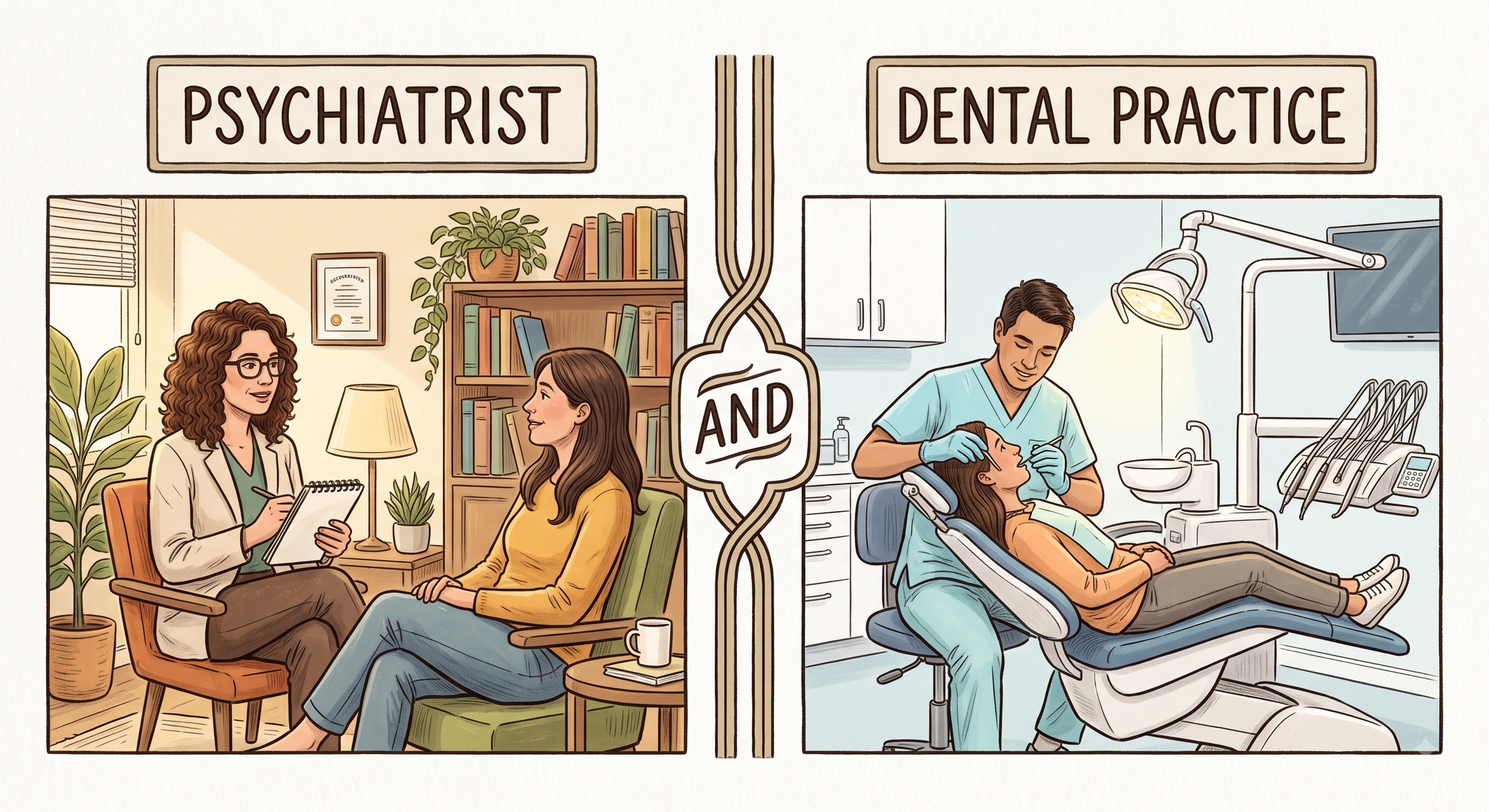
If you run a two-chair dental practice or a solo psychiatry office, you have probably had some version of this conversation with a vendor: yes, you need certified controlled-substance e-prescribing, and yes, one way to get it is to buy a bulky electronic health record system.
That answer has never made much sense. The requirement is real. The bundling is a business model.
What EPCS actually requires
Electronic prescribing of controlled substances comes with three requirements, and none of them is complicated:
You have to prove you are who you say you are. Identity proofing verifies your government-issued ID, your current state authorization to practice, and your DEA registration. You do it once.
You have to authenticate at the moment you sign. Not at login — at signing, each time, using two separate factors. In practice that’s usually a password plus a one-time code on a device you carry.
The software has to be certified. The prescribing application must pass an independent audit confirming it meets the DEA’s requirements, and be re-audited over time.
That’s the whole list. Notice what isn’t on it: an electronic health record. The certification attaches to the prescribing application, not to a records system. Everything beyond those three requirements is packaging.
Federal rules require controlled substances prescribed under Medicare Part D to be transmitted electronically, and most states have added mandates of their own with varying scope and timing. If you write controlled substances at all, you are probably already in scope — and state requirements change often enough that it’s worth checking yours directly rather than relying on what a vendor told you two years ago.
Why dentistry keeps running into this
Dentistry is the clearest case of a specialty that prescribes controlled substances while rarely operating anything resembling an EHR.
Post-operative pain management is a normal part of the work. Dentists have reduced opioid prescribing substantially over the past two decades, and the profession deserves more credit for that than it usually gets — but “less than before” is not “none,” and a single controlled-substance prescription after a surgical extraction puts the practice inside the requirement.
Meanwhile the software in a typical dental office is practice-management software: scheduling, charting, claims, imaging. Some of those systems offer EPCS as a paid add-on. Many don’t, and the ones that do often price it for a multi-location group rather than a two-operatory practice. The independent dentist ends up choosing between a module they can’t justify and a workflow that’s running out of road.
Why psychiatry runs into it harder
Psychiatry has the same structural problem with worse arithmetic.
A psychiatrist managing a panel of patients on maintenance medication is prescribing controlled substances continuously — not occasionally, not as an edge case, but as a routine part of nearly every follow-up. Controlled-substance prescribing isn’t a corner of the practice. For many psychiatric practices it is the practice.
Small psychiatric practices, telepsychiatry practices, and PMHNP-owned clinics are also among the least likely to have bought a full EHR. The care model doesn’t demand one. The prescribing rules do demand certified EPCS. That gap is where a lot of clinicians are currently improvising.
What a standalone setup looks like
eNavvi was built by physicians for exactly this shape of problem: prescribing that works on its own, without an EHR underneath it.
You search medications, compare real-time cash prices at pharmacies near your patient, and send the prescription electronically anywhere in the country. Non-controlled prescribing is free, permanently. EPCS — the identity proofing, the two-factor signing, the certified application — is $20 per month after a one-month free trial, and you can cancel at any time.
Twenty dollars is roughly the point at which the build-versus-buy question stops being interesting. It’s less than most EPCS add-on modules, and considerably less than an EHR bought to obtain a single feature.
The platform is HIPAA compliant, SOC 2, and LegitScript approved, and it’s used by more than 4,000 prescribers.
The part your patients notice
There’s a second reason small practices end up here, and it has nothing to do with the DEA.
When a patient doesn’t fill a prescription, you usually don’t find out. Cost is a frequent reason, and it disproportionately affects the patients least likely to raise it with you. Dental patients are often uninsured or paying out of pocket for procedures their plan excludes. Psychiatric patients frequently face high deductibles and formulary restrictions on precisely the medications that work.
Seeing the cash price at the pharmacy down the street — before the patient leaves — turns that from a conversation you never have into one that takes fifteen seconds.
Where to start
If you prescribe controlled substances and don’t have certified EPCS, confirm what your state requires, then get identity proofing done. It has the longest lead time and it’s the step people put off.
You can create an eNavvi account and prescribe non-controlled medications free, then decide about EPCS once you’ve seen whether the workflow fits your practice.